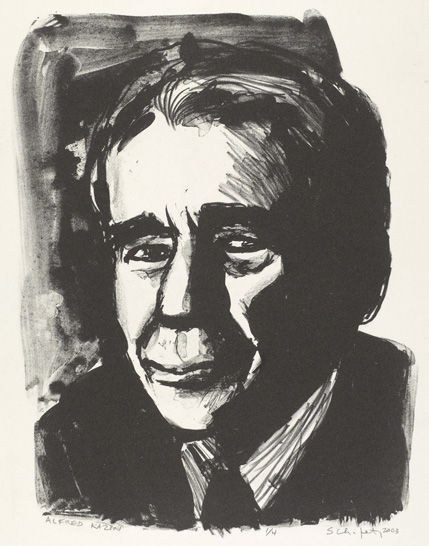
Alfred Kazin (1915-98) was a noted Jewish critic – one of my least favorite literary types. I’m not a fan of that species because it’s part of the Jewish monopoly on printed media. (Don’t believe me? Check the names on the mastheads of every magazine and publishing house in America but… be careful. Many of those Anglo-Saxon sounding names are not genuine. Name changing is part of the Hebraic shape-shifting ploy called passing.)
Boychik Outa Brooklyn
The Jewish critics rave about members of their own tribe (often without merit) while neglecting more talented gentile writers. And, they only promote philo-semitic authors. Plus, their view of literature is hopelessly tainted by their Jew-centric perspective. So, to put it mildly, there exists an unbridgeable political, religious and cultural gap between Alfred Kazin and I.
And yet… I gotta say that I loved Alf’s memoir of growing up in the Jewish ghetto that was Brownsville, Brooklyn in the 1920s and 30s. In fact, I couldn’t help liking the guy. Go know. I think it’s that undefinable “Brooklyn” thing that bonds us.
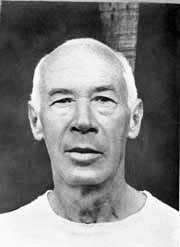
Like Alf, I’ve always been a compulsive urban walker; a trait we share with another Brooklyn boy – Henry Miller.
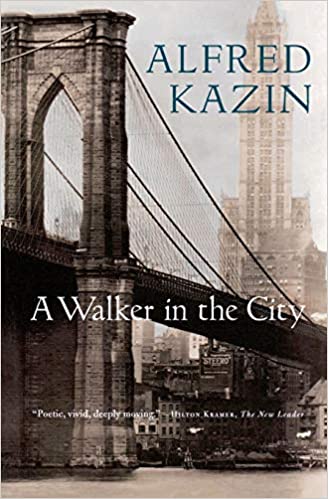
A Walker in the City is Kazin’s elegantly written collection of character studies, incidents and musings. It brims with colorful tales of rabbis and radicals, great books, great music, great meals and great awakenings. The reader senses Kazin walking himself into adulthood and consciousness. His love of Brooklyn, literature and his people permeate every page. I admire his own writing more than his criticisms of others.
Don’t get me wrong. I bristled at much of what he wrote but he did such a great job of writing that I cut him some slack. Hey, I’m easy. So, sue me.
I owe Alf a debt of gratitude because his memoir was one of those that inspired me to tell the story of my boyhood across the borough in Italian-Catholic Brooklyn. That said – our takes on race, religion, sex and politics are as diametrically opposed as his Brownsville is from my South Brooklyn.
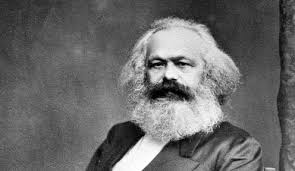
Karl Marx – Brownsville’s Meshuggah Messiah
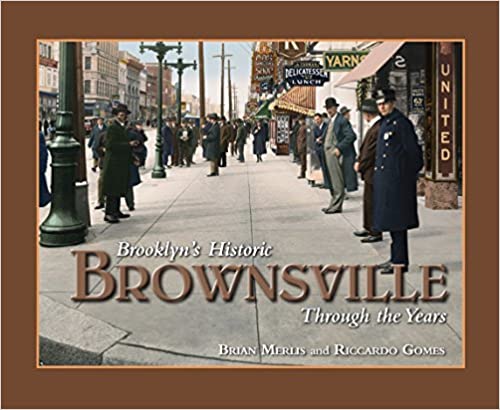
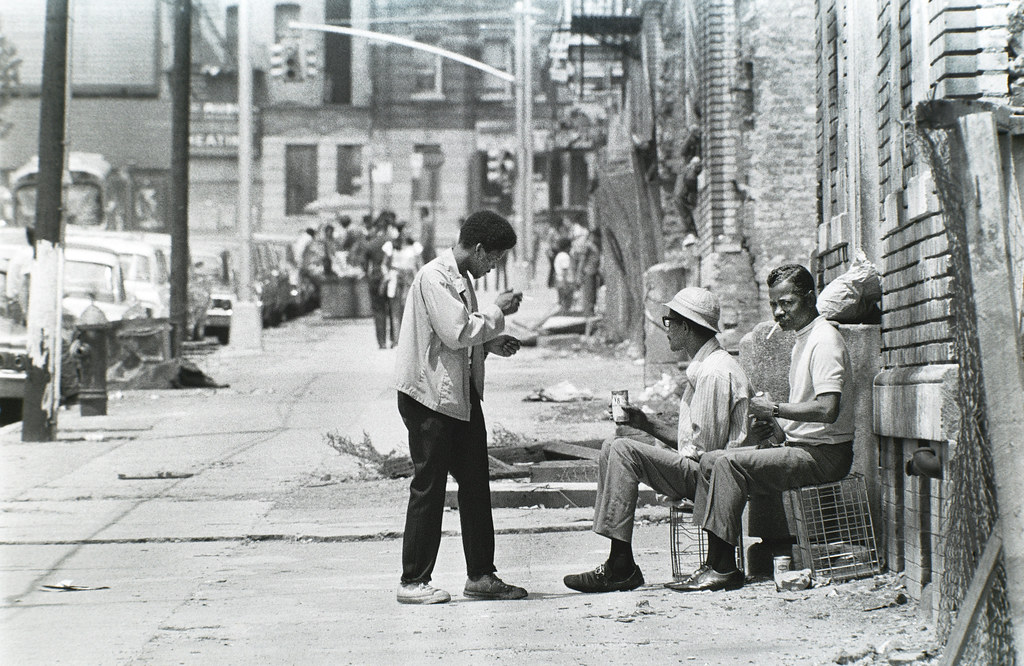
It’s a sad but predictable irony that all of the Marxist and liberal bullshit about class and race preached in the streets and synagogues of Brownsville (and described so brilliantly by Alfred Kazin) failed. Bigtime. Marxists embedded in the city government used Marxist principles to replace the Jews of Brownsville with the Blacks of Brownsville. The result? After “70 count’ em 70” years of those Marxist ministrations, Brownsville is the murder capital of New York City.
A lively debate about Torah and Das Kapital.
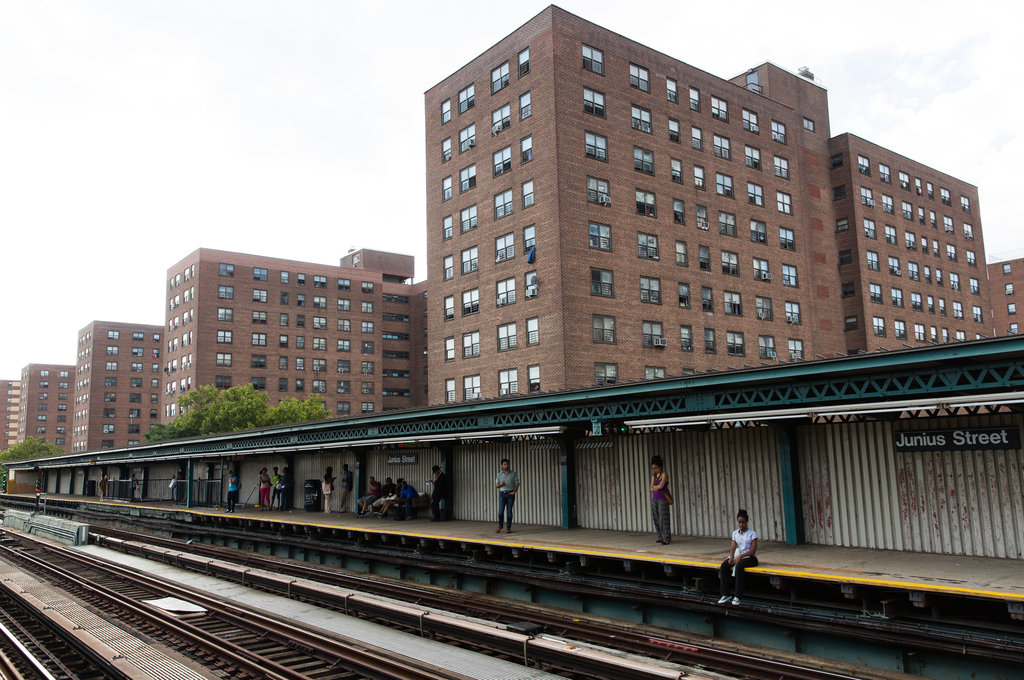
The area was never a garden spot but now it is a no-go zone of hellish housing projects. It makes Flatlands and East New York look like Cap d’Antibes.
Catching the Last Train to Brownsville.
The few Jews left in Brownsville (even fans of Martin Luther King and Nelson Mandela) have become the prey-of-choice for roving gangs of feral youths playing the “knock out game.”
No wonder “down with the struggle” Bernie Sanders abandoned Brooklyn for Lily White Vermont.
Never mind… if you enjoy reading memoirs written with wit, style, brain and heart then have I got a Brooklyn book for you – A Walker in the City by Alfred Kazin.
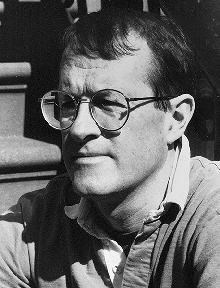
Why do the best “tough-guy” writers always look like Geography teachers?
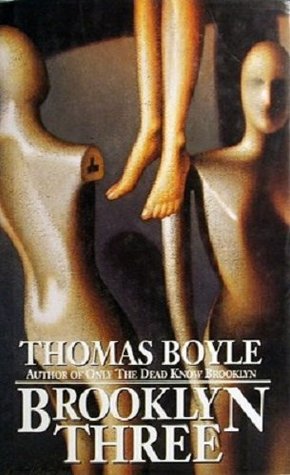
The late Thomas Boyle was a Pennsylvania kid who spent part of his childhood in Brooklyn. (That makes him an Honorary Brooklyn Boy in my opinion.) He graduated from Cornell, earned his doctorate at NYU and taught at Brooklyn College for many years. Some book review sites confuse him with the more famous T.C. Boyle the author of many brilliant novels including The Road to Wellville – set in a 19th century health-spa and Drop City – set in an Alaskan hippie commune.
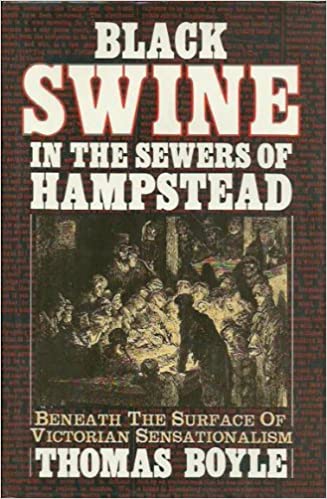
Our Thomas Boyle’s last book (published in 1990 in the midst of his crime trilogy) was Black Swine in the Sewers of Hampstead – a study of Victorian crime fiction. It sounds like the Sherlock Holmes mystery Conan Doyle forgot to write! I’ve added it to my “must read” list.
Any fan of gumshoe fiction will enjoy Boyle’s modern yet faithful reworking of the much-loved archetypes and plot devices of that often hackneyed genre.
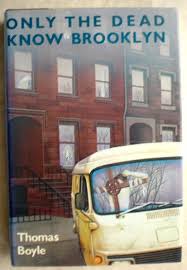
Anyone who knows the geography of Brooklyn will get an extra kick out of Boyle’s locales. His hard-boiled tales follow Detective Frank DeSales as he chases bad guys down hidden alleys in Red Hook, across garbage strewn vacant lots in Williamsburgh and even onto the hallowed ground of Green-Wood Cemetery.
If you like Lawrence Block’s ex-cop now “private dick” Matt Scudder, you’ll feel right at home with Thomas Boyle’s active duty detective Frank DeSales. They are brothers from another mother.
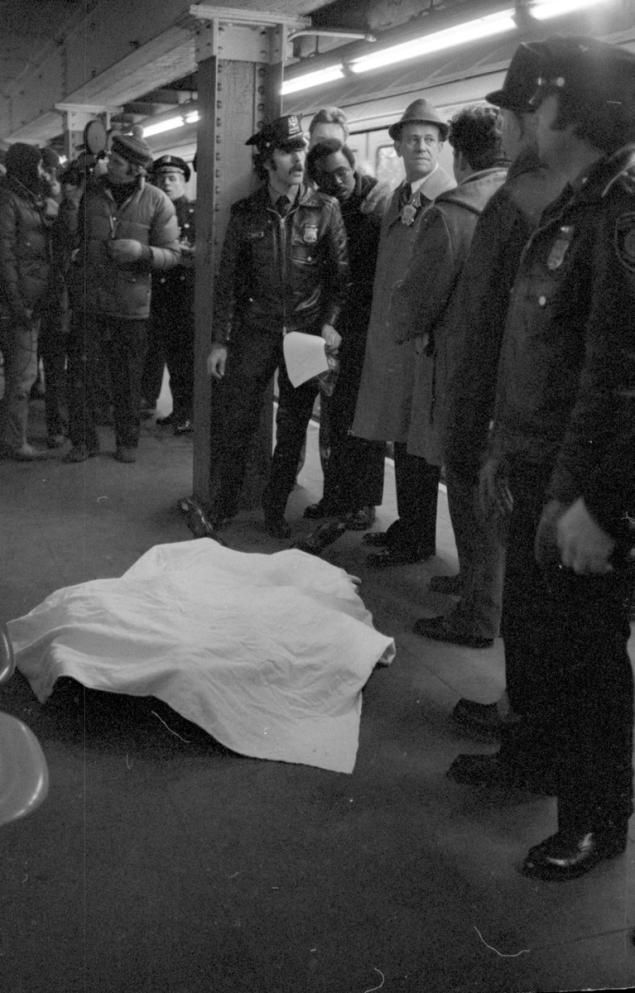
“On the job”
I can’t find any movies or TV shows based on this trilogy which is a shame and surprising. For decades now, “All things Brooklyn” have been all the rage. Go know!
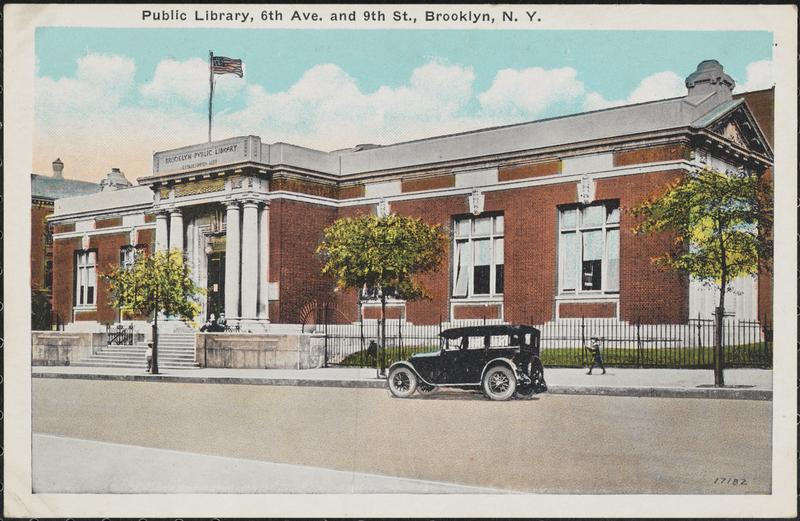
My discovery of Brooklyn literature began here. In fact, I still have an overdue book from this branch. Hey, I remember that car!
Any list of famous writers from Brooklyn would fill a decent sized phone book. And any list of books set in Brooklyn would be almost as large. I’ve read plenty of both but there are many more I’ve missed. So, the posts I’ll be making about Brooklyn books will be far from a definitive list. Think of them as tips from your friendly Brooklyn librarian.
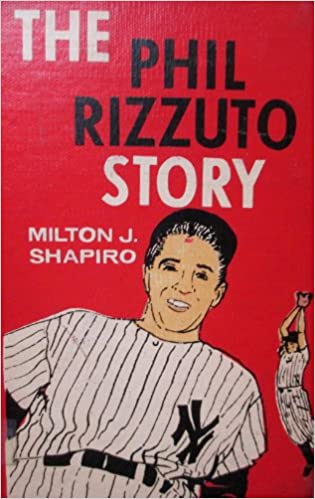
It would be remiss of me not to begin with the very first “Brooklyn” book I ever read. (Hell, it was the very first book I ever read cover-to-cover!) And, I’ve reread it many times since – most recently last Tuesday. In fact, it’s the overdue book mentioned above – overdue for over 60 years! If you haven’t read it then all I can say is, “I pity you!”
The life & loves, wit & wisdom, trials & tribulations of the inimitable “Scooter” – Hall of Fame Yankee shortstop and broadcaster. And, it goes without saying quintessential Brooklyn Boy.
“Psssst, hey kid, ya wanna read a really doity book?”
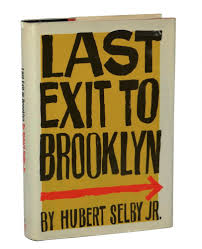
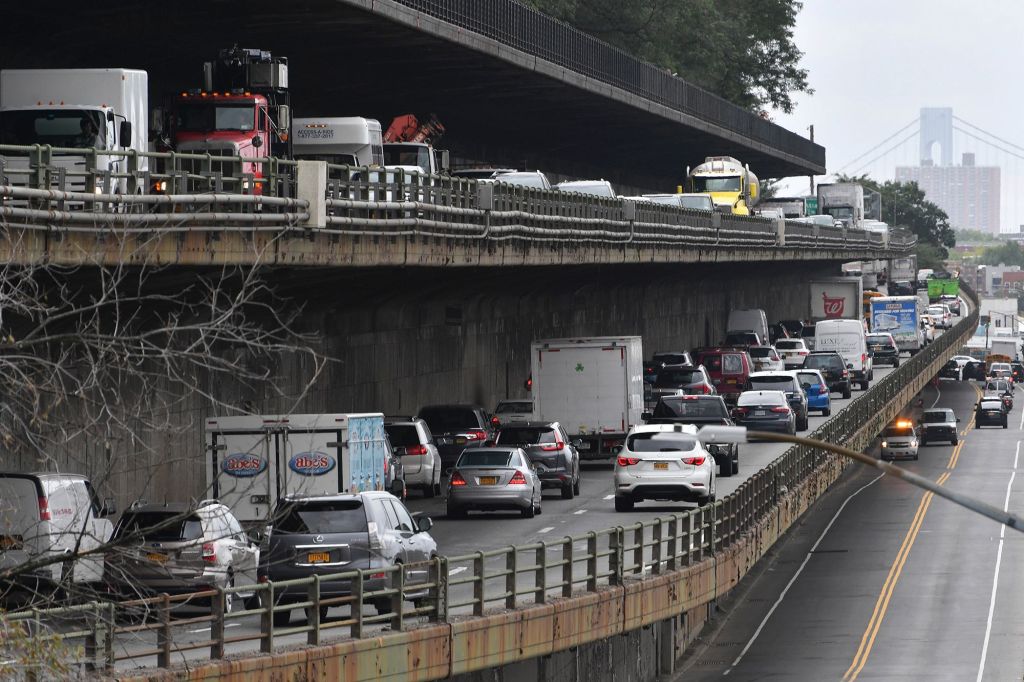
As you drive into Brooklyn across the Brooklyn Bridge a large sign looms up at you. It screams, “Last Exit to Brooklyn.” If a driver doesn’t take that exit they are taken onto the Gowanus Expressway and thence over the neighborhood of Sunset Park where the spectacularly downbeat novel Last Exit to Brooklyn is set. In the 1950s, the period of the novel, that sign should have screamed, “Abandon hope all ye who enter here.”
In the 50s, the waterfront of Sunset Park was a land of perpetual night – a slum rotting in fetid shadow beneath the elevated Gowanus Expressway. The Mafia had killed the docks, Robert Moses had killed Sunset Park by cutting it in two with his hideous highway and the Dodgers had killed Brooklyn by moving to L.A.
Hubert Selby Jr. knew this coz he was a Brooklyn boy born right next door to Sunset Park in Bay Ridge.
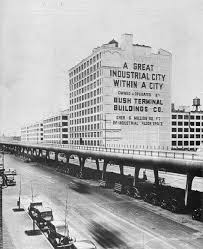
Industry City – another flop by Robert Moses & FDR. It’s now a gentrified flea market. Hey, I remember those cars, too.
Selby’s book consists of inter-locking tales of losers, junkies, sadists, pimps, hookers and trannies who fight for scraps in a nightmare world of gangs and gang-bangs.
Vying for the title of Miss Gowanus Expressway
I was raised in the 1950s just a few blocks away from this world. I even swam in the public pool there. But, I knew better than to venture into the Terra Incognita below the highway. Many years later, I met a Yorkshireman who had lived in a sleaze-bag hotel in Sunset Park during WW2. He was outfitting ships to British standards that had been built in the Brooklyn Navy Yard. He told me that the whole area was full of crap games, gyp-joints and whorehouses all making a fortune from the servicemen and dock workers.
They all hadda get drunk and they all hadda get laid.
They all hadda get drunk and they all… Hey, dig those crazy saddle shoes!
In the 1980s, I would spend pointless, penniless weekends meandering around Brooklyn by bike. I was drawn to the derelict and rotting factories of Industry City that lined the waterfront in Sunset Park. I thought, “Damn, this would make a great film set.” And, that’s exactly where, a few years later, much of the movie of Last Exit to Brooklyn was filmed.
In the 80s, it was just me, my bike and tumbleweeds.
That film is good but doesn’t capture the daring style and outrageous vitality of Selby’s prose. Plus, by 1989, much of the shock value of his book’s subject matter had been lost. But, when it was first published in 1964, Last Exit to Brooklyn was an outrage and banned in several countries. I haven’t been impressed by Selby’s other work but anyone interested in the lower depths of Brooklyn life and the heights of “outsider” American literature should read Last Exit to Brooklyn.
In 1965, I read it as a 15-year-old while working as a messenger in Times Square. The guy who sold it to me could have been arrested. I made sure that its instantly recognizable cover was always visible sticking out of my back pocket as I made deliveries. And, I made sure that same cover was visible as I read Last Exit to Brooklyn on the subway. I didn’t live in a artist’s garret in Greenwich Village but it was fun to pretend that I did.
Suiting up for another graveyard shift at the Grand Central Station P.O.
The Christmas blues of 1970 morphed into the January blues of 1971. I and my fellow “cultural casualties” of the 1960s having dropped out of college and dropped far too many psychedelics were facing the prospect of a lifetime of blue-collar work in the Post Office.
Yeah, yeah, it was a job-for-life with uniform and pension but not quite what we had envisioned for ourselves just a few years before. Back in college we were going to be actors, writers, musicians, poets, painters, philosophers even. But, the luster had faded from our Age of Aquarius fantasies as it had from the few sorry strands of Christmas tinsel that hung from atop the mail sorting coops.
We were a motley crew but not without our talents and charms. Alex was a half-assed genius and chess master. Mark was a poet and fluent in Latin. Murray was a killer wit and killer blues guitarist. Sandy was trying to decipher the hidden codes in Dylan’s lyrics. And, Charles, our only Black member, was trying to convert everyone at the Post Office to 7th Day Adventism and vegetarianism. We were all from working class families and had discovered to our shock and horror that unless something miraculous happened we would not escape the gravitational pull of our caste. So, we embraced our fate.
Our new self-image and style
As if on cue and without any spoken agreement, we took to wearing plaid, flannel work shirts, tattered jeans, garrison belts and battered work boots. We cut our freakish hair back to a moderately radical length. Less Woodstock. More Workers of the World. We trimmed our facial hair to Lenin length. And, we embraced the Grateful Dead’s album Workingman’s Dead as if it were written only for us. After all, we were nothing if not workingmen.
A great album even if you’re not working.
One of the worst aspects of being a trainee mail-sorter was that we weren’t guaranteed hours. If the mail dried up we were sent home. And, this often happened shortly after we had clocked on for our graveyard shift. There we’d be in midtown Manhattan at Midnight having planned to be up all night and having ingested amphetamines to help us be up all night but suddenly with no reason to be up all night. Luckily, Alex lived in a nearby East Side tenement so we’d pick up some munchies and beer and head over to his pad, there to smoke hash and listen to Workingman’s Dead till dawn’s early light. Or, at least, till Alex’s neighbors banged on the walls. We named ourselves the Dead Workingmen. (Okay, not that clever but we needed all the help we could get.)
Suddenly, it became embarrassingly clear that Tony, one of our Supervisors, was madly in love with Sandy. I don’t think this burly Italian knew he was gay and he certainly wasn’t swishy in any way. But, goddamn, he was as queer as a three-dollar bill for Sandy. Lovesick Tony was eager to demonstrate to Sandy how powerful he was by how many favors he could do for him. One big problem. If he gave Sandy a break he had to give it to all of the Dead Workingmen or his cover would be blown. We teased Sandy mercilessly about his conquest but he still generously connived to use his charm over Tony to the group’s advantage i.e. without “coming across” for the Italian Stallion, Sandy kept him sweet on our behalf.
“Hey, I love you, Sandy. You got a problem wit dat?”
Some nights Sandy would persuade Tony to let us get lost for a few hours. We’d head over to Alex’s while still on the clock and then sneak back in at 8AM to punch out. Some nights at Sandy’s behest Tony would let us hide and sleep on the filthy mailbags piled out on the loading dock. Other nights he’d put us on parcel sorting duty – a welcome break from the din and dementia of the sorting coops.
We’d stand before rows of open mailbags and practice our basketball jump shots tossing boxes into the bags. Sometimes we even read the addresses and aimed for the right mail bag. Sometimes we even made a basket. But, truth to tell, we didn’t give a shit. We had come to hate the mail itself. Mark once tickled his throat until he vomited into the tray of mail he was sorting. (I know, I know, disgusting. But, you gotta understand that 99.999999% of the mail we were sorting was junk mail. And, the rest was going to Reverend Ike!)
Time Clock Confidential
“Oh yeah, punch this.”
I don’t know if anyone actually punches a time clock anymore. But when I first joined the world-of-work as a teenager, I was angered by the demeaning nature of this act. I was even more angered by the grown-ups who loitered by the time clock waiting for it to tick to a specific second so they could get a few paltry shekels more in their meagre pay envelopes. I was embarrassed for them and hated how they compared stories of time clock victories and defeats and of famous “time clock jockeys” of yesteryear. ThePost Office was full of these lifers who stared in amazement and clucked with disdain as I strode past them and punched out without even looking at the hour hand. Wage slaves. Not me.
The Dead Workingmen hard at work.
Meanwhile back at the Tony-Sandy love affair things became waaaay too strange and sad for this trainee mail-sorter. It happened one night when members of the Dead Workingmen were surreptitiously tapped on the shoulder and told to report to Tony’s office. There we discovered the other invited guests were the usually unfriendly Supervisors. Tony had set up a movie projector and hung a sheet on the wall. He greeted us conspiratorially then locked the door, turned off the lights and showed us a stag movie i.e. the type of fuck-film that was usually confiscated if sent in the U.S Mail. I wondered if this film had been caught by an eagle-eyed postal dick and turned over to Tony.
As the silent, grainy, 8MM black and white film unspooled on the stained sheet, the air in the room became noxious with nervous laughter, unfunny quips and cigar smoke. We’d been invited to a classic “smoker.” The film showed a singularly unattractive couple reclining on a singularly uncomfortable table and fucking in a singularly unenthusiastic manner. Watching their coitus was as erotic as watching the piston action on a Ford V8. But, I sensed that a bizarre male-bonding ritual was at play. The Supers wanted to show us that they weren’t such bad guys after all. Hey, they were like our fathers and uncles – just a bunch of older working-class fellas who liked watching fuck-films with a bunch of younger working-class fellas. This secret screening was an olive branch extended across the generations and a sort of test.
Would we make the grade and join their ranks of Merry (albeit horny) Mailmen?
Also, except for Charles, we were all White as were the Supers. I sensed they wanted to find racial solidarity with us since they spent so much time with obese Black women with whom they shared little cultural interest. Least of all watching fuck-films.
I’m sure that shrinks would highlight what they’d claim was clear homo-eroticism in this sweat-lodge soiree. But, I don’t think that was what was going on with the Supers. Except for Tony. He turned on the projector, pushed me aside and sat next to Sandy. As the couple built to their inevitable climax we all watched in silence. Except for Tony. He giggled and elbowed Sandy while peppering him with questions in hushed rabid whisper.
“You believe the size of the cock on that guy?”
“Wait. Wait. She swallows the whole thing.”
“Look at that bush. You like hairy twat, Sandy?”
“Hey, Sandy, you ever put it in a girl’s ass?”
Then, after the “money shot” in which the on-screen stud splashed his semen all over his fair maiden’s belly Tony gushed – “Yeah, that’s the good part, right, Sandy?”
The Supers must have overheard Tony’s pillow talk but they didn’t react. Meanwhile, the Dead Workingmen shared looks of amused horror. Mainly horror. Then the lunch horn barked, the lights came on and with eyes cast downward we bolted out of there muttering, “Holy shit, what the fuck was that?!”
Shortly after that night I was fired for telling an especially sadistic Supervisor to go fuck himself. The union jumped to my defense assuming that I wanted to keep my job. At the mediation meeting the union rep was dumbstruck when I told all present that the United States Postal Service could sort my job where the sun don’t shine. I thought about throwing the porn party in their faces but didn’t coz I knew that would make big trouble for Tony and the Dead Workingmen I was leaving behind.
Workers of the world unite. You have nothing to lose but your jobs.
CODA
Ten years later while walking in the middle of nowhere on Staten Island, I ran into Murray. (What are the odds?) We recognized each other even though he was now as obese as his female Black co-workers. Yes, he was still at the Grand Central P.O. but he was now a Junior Supervisor. No, he wasn’t playing guitar anymore.
It was an awkward encounter and a painful one for him. Murray and I had come from similar working-class backgrounds, two Brooklyn boys who had arrived at the same point via similar paths. Then our paths diverged. I had followed my dream of being an actor. He had buried his of being a musician. We exchanged phone numbers and promised to get together. We never did.
When I was a little shaver, my mother told my siblings and me the heartwarming story of a mother with many children who had killed herself on Christmas Eve. She put her brood to bed with visions of sugar plums dancing in their heads then turned on the gas oven and laid down under the Christmas tree among the presents. That’s the way her children found her on Christmas morn. As a child, I wondered how she could bear to kill herself before opening her presents. But, with every passing Yuletide, I understood more and more why that mother had checked out in such ghoulishly festive style.
Christmas is a burden. A time of testing. A time of taking stock. And, woe betide anyone who comes up short. The pressure to be happy is overwhelming. Everywhere there are the iconic images of Santa, sleigh bells and snow; everywhere the glowing fireplaces, twinkling trees; everywhere the perfectly wrapped presents and perfectly formed snowmen.
Christmas in South Brooklyn looked just like this. Honest.
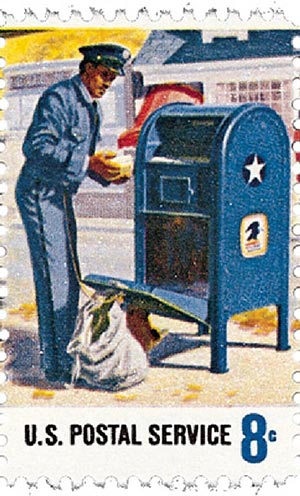
And, the U.S. Post Office is one of the major purveyors of this Christmas myth via its nostalgic stamps and “mail early” missives. So, imagine my chagrin when December of 1970 found me working at the “Christmas coal-face” aka Grand Central Station Post Office – one of the largest Christmas card sorting offices in the world.
This was a time before emails, texting and twitter when people mailed each other Christmas cards to such an extent that the P.O. had to hire seasonal workers to handle the Xmas deluge. We sorters were buried under red and green envelopes for weeks and had to work tons of over time to make a dent in the never-ending flow.
I was then living in a dreary studio apartment in a dreary Brooklyn neighborhood without even a dreary girlfriend. Sadly, I couldn’t afford a Christmas tree to commit suicide under. (Hell, I could barely afford to pay my gas bill.) I needed the O.T. so I worked all the hours the P.O. threw at me. And, even though the Post Office closed for Christmas Day, I did have a shift on Christmas Eve.
That magical, candy cane night brought a heady party atmosphere to the usually grim sorting floor. The shift bosses cast off their usual Scrooge demeanours and donned elf hats and light-up reindeer horns. Most terrifying of all were the ancient workers (male and female) who stalked the sorting aisles brandishing sprigs of Mistletoe. These creeps had never smiled or spoken to me all year but were suddenly wagging their egg-nog-coated tongues in my direction.
The obese Black women who were “union-job-for-lifers” had years before commandeered certain sorting aisles as their private turf and held “INVITATION ONLY” office parties in them. They jealously guarded their paper plates covered with baloney and their Ritz crackers covered with aerosol cheese while they quaffed bottle after bottle of Colt 45 and Night Train.
What part of “INVITATION ONLY” don’t you understand?
Yeah, you could use this shit to write “Merry Christmas” on a cracka… er, I mean… cracker.
Meanwhile, an oldies radio station blasted the usual rock & roll “Christmas classics” on heavy rotation. It also played Air Force radar reports of a mysterious, manned flying object that was tracked leaving the North Pole and headed for New York.
Just shoot me.
When our 4AM lunch break came, we were called to an open area where many of us climbed atop the towering mail machinery and dangled from it like Marxists seizing the means of production.
The sadistic fat-fuck who ran this P.O. suddenly appeared in a cheap Santa suit and arm-twisted a few of the obese Black women to sit on his lap. This much racial fraternization was a rare thing in 1970s America. Cue: A rash of awkward jokes about negroes and Noel.
In the Hallmark movie version he would look like this.
But, this was the Grand Central Post Office version.
Mercifully, several other obese Black females appeared in full Gospel choir drag to serenade us with their screeched renditions of Silent Night and We Three Kings. They finished their set with a sing-a-long of White Christmas. Cue: more forced racial jokes.
In the Hallmark movie version they would be great but…
Then the back to work bell sounded putting an end to this Happy Holidays horror. At the end of my shift, I headed for the subway through a deserted Grand Central Station and wondered where I could buy a Christmas tree with gas jet attached.
Hallelujah! I passed the Post Office test with a gold star and was told to report to the massive Grand Central Station sorting office hidden behind the even more massive Grand Central Station. I quickly learned that working there was noisy, numbing, mindless, repetitive, soul-destroying drudgery. A shift was eight endless hours in a sweatshop under the blare of metal machinery, the glare of fluorescent lights and the stares of angry bosses and suspicious Black women who weren’t best pleased that a White-boy was on their patch. A White-boy who had passed the Post Office test first time. And, without special tutoring!
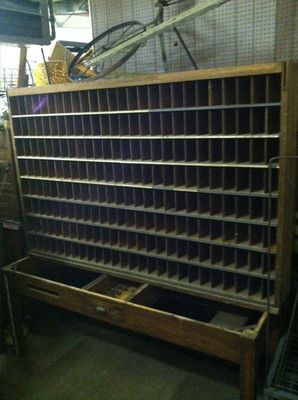
I was shown to my letter sorting station where I sat perched on a scoliosis-inducing high stool facing pigeon coops labeled with Zip Codes – 11213, 10751, 10001 etc. Like a touch typist, I was expected to know the Zip Code coop positions by heart, grab letters from the mail trays before me and deftly flick them into the correct coops without looking. Meanwhile, the slave drivers… er, I mean… shift-bosses strode up and down the aisle shouting at me to work faster. I noticed that they never shouted at the obese Black women perched precariously on their high stools with one hand in a mail tray and the other in a bag of potato chips gossiping with the obese Black women on either side. These union-job-for-lifers occasionally tossed a piece of mail in the general direction of the coops.
The rack… er, I mean… the mail sorting coops
Trainees had to raise their hands and request permission to pee and then had to sign in and out of the toilet room. After a few weeks on the job, I was threatened with unpaid suspension for taking too many pee breaks. But, I wasn’t going to pee or to do a line of coke. I was going to splash water on my face to stay awake. I was working the “graveyard shift” – Midnight to 8AM. And, it was pure hell.
I would finish acting in a play downtown at 10PM then have two hours to kill before punching in at Midnight uptown. So, I’d join the other actors for a few beers and then head to work. I was never drunk but the hour and the alcohol conspired to make staying awake until 8AM a muthafucka. Round about 3AM, I would start fading and start my regular treks to the toilet.
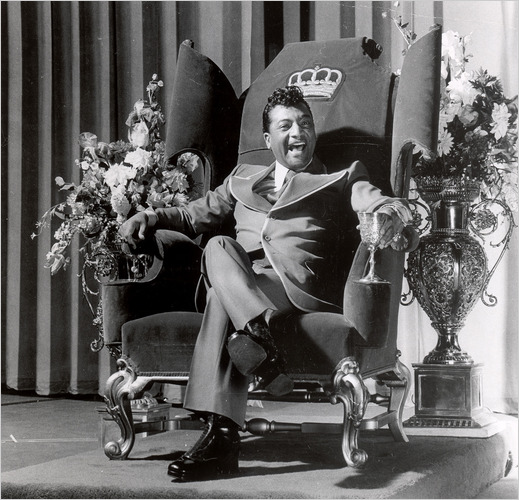
Meanwhile back at the pigeon coops… one coop didn’t have a Zip Code. It had a name. That name was Reverend Ike – a Black televangelist who had become very popular in the early 1970s. And, no foolin’, the Good Reverend got so much mail he needed his own Zip Code!
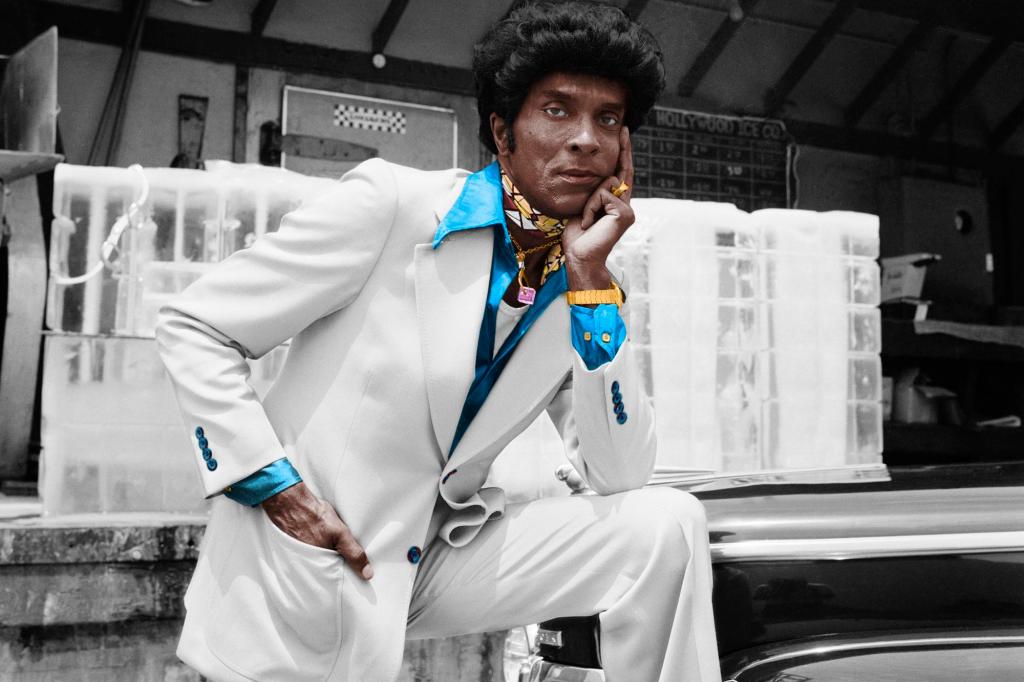
Ike sported the processed hair and wardrobe of a pimp. And, like a pimp, he was all about money. But, he was also intelligent, articulate, witty and (I still believe) genuine. (As an actor, I admire all good public speakers and Ike was one of the best. You can catch his act and his suits on Youtube. Forget Creflo Dollar and all of today’s exponents of the “Gospel of Greed” coz Ike had ’em beat.)
The real Godfather of REAL Soul
Ike’s God wasn’t no welfare God. Ike’s God was a Maserati, mink coat and motorboat God. Ike’s God was The God of Bling.
I liked Ike.
I liked him coz he wasn’t a hypocrite. He wasn’t preaching sack cloth and ashes while wearing Armani. He wanted his congregation to wear Armani, too. (Jim and Tammy Bakker later practiced and preached this same holy excess. And, Joel Osteen has become America’s top televangelist with a white bread version of Ike’s message.) But, Ike’s theology wasn’t original. It was a mish-mash of Dale Carnegie, Norman Vincent Peale and Napoleon Hill with a dash of the uber-pimp Iceberg Slim thrown in for good measure!
The Gospel according to Iceberg Slim
Ike had his congregation hold up and wave dollar bills while intoning, “I want money. I love money. Money is my friend.” He closed his broadcasts with a call for Love Gifts. Those were to be sent in an envelope simply addressed to –
Rev. Ike
Grand Central Station
New York , New York
The envelopes that I sorted into Ike’s coop (and I sorted lots every night!) were written in pencil, in shaky little-old-lady handwriting with many words misspelled and with backward letters. We mail sorters passed around the funnier versions. I envisioned Black little-old-ladies all over America waving their dollar bills at their TVs while intoning “I love money” then sticking the bills in an envelope addressed to “that nice young man” – Rev. Ike.
Some envelopes held nothing but coins but others held very large bills. (We held the envelopes up to the light and called out the denominations.) The bigger the bill you gave, the bigger the boat you got. Or, at least, that’s the way it was supposed to work. If your ship never came in then maybe you just weren’t gifting enough. (Okay, so Ike was a conman but he was a genuine conman – a very common character in American social, religious and political history.)
One night I was being lectured about Aesthetic Realism by the paunchy, prematurely balding Jewish guy to my right. He was working on a masters in Philosophy at Columbia. (There were a surprising number of screwy-scholars working at the P.O. and they all had theories about everything from Bauhaus to blintzes.) This particular genius was also a homosexual and he wasn’t happy about it. He explained to me how Aesthetic Realism would cure him of his compulsion to fist anonymous members of the public in public restrooms.
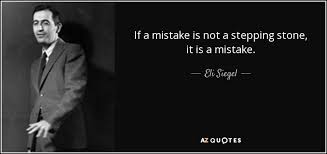
Aesthetic Realism was a psychobabble micro-cult founded by the Jewish poet Eli Siegel, who claimed that he could cure queerness. Aesthetic Realism enjoyed a Nano-second of popularity in the pretentious arty-academic circles of Manhattan in the early 1970s. But, I don’t think it ever made it across the Hudson. And, it was soon surpassed by the psychobabble sensation called est which was concocted by another Jew – John Rosenberg… er, I mean… Werner Erhard. He was a conman and not a genuine one. (What is it with these Jewish conmen and their psycho-cults already? But, enough about Sigmund Freud.)
Reminds me of the deep thought of that other Jewish psychobabble genius – Marianne Williamson
So… anyway… I was half-listening to my conflicted colleague while planning my next trip to the toilet and praying he didn’t follow me in when… WHAM! Mr. Aesthetic Realism was pulled off his perch, handcuffed and dragged away kicking and screaming by a pair of plain-clothes postal cops. They’d been watching him for some time and caught him sorting mail meant for Rev. Ike into his own pocket.
There was no loudspeaker announcement acknowledging what had just happened. The guy was simply disappeared like a Soviet dissident. At the next coffee break the Post Office grapevine passed the news that not only were we being watched from above like gamblers in a casino but there were spies working among us posing as trainees and lifers. We were slaving in the Grand Central Gulag.
As the psychedelic sixties deflated into the sinister seventies, America was suddenly full of draft-dodgers, drug-burnouts and college-dropouts. They had few prospects and fewer skills. I was among their number. We “cultural casualties” wore the facial expression seen on the faces of people whose home has just been sucked away by a cyclone. It asked, “What the fuck just happened?” It asked the more terrifying question, “What am I gonna do now?”
The answer for many of was, “Take the Post Office test.”
I was among their number.
Don’t laugh.
The Post Office was a union job, a job for life, a job with a uniform and a good pension and… and… “Jesus Christ,” I thought, “how the fuck did I get here? I’m an actor. I’m supposed to be a Broadway star. I supposed to play a mailman not be one.”
And, in fact, I was then starring off-off-off Broadway in a roach-infested basement in Manhattan. But, I figured I could get a graveyard shift at the P.O. that would pay my rent and leave my days free for auditions, lunches at the Four Seasons with movie stars and eight shows a week on the Great White Way. I might need this back-up job for a month or two. Tops.
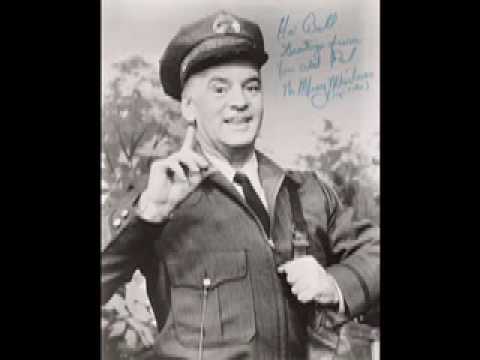
Plus, like all baby-boomers I’d grown up watching The Merry Mailman on TV so I had a special affection for all things postal.
He was always smiling so how bad could the gig be?
The test was held in a grubby room in an even grubbier West Side mail sorting office. As we applicants milled around outside the building waiting for the start time, I couldn’t help noticing that I was the only person there who was not Black, female and the size of a sumo wrestler.
While these large ladies nervously ate and smoked, I nervously scanned the crowd for a friendly freaky face. Finding none, I assumed this intake of recruits was a demographic anomaly.
Remember the first tests you ever took in school? The tests that used pictures rather than words? Brightly colored pictures? And, the few words on the page were in big size type? That’s what the test was like to gain a life-long union job with uniform and pension in the United States Postal Service.
Which of these three things does not belong with the other two?
Picture of Horse
Picture of Cow
Picture of Banana
John Q. Public plans to sail to Bermuda. Which of these will he use to make the trip?
Picture of Horse
Picture of Cow
Picture of Sail Boat
I am not now and was not then a brain box. Honest. I possess very modest IQ and SAT scores. But, I aced this no-brainer test in no-time and sat there twiddling my thumbs. Suddenly, the not-so Merry Mailman running the test banged his gavel and ordered us to put our pencils down immediately. This African-American gentleman then explained in grave tones that if any of us found this test too difficult we could choose to re-take it. In fact, the Post Office had specially trained tutors who would work with worried applicants to help them pass this stringent test in a month’s time.
Unison sigh of relief. Laughter. Test papers tossed into air. And, Whoosh! I was almost sucked out of the room in the wake of the departing Black multitude.
Stay tuned for the next exciting instalment of Blog Outa Brooklyn – POSTAL REALISM. You’ll thrill as this reporter goes undercover as a mail-sorter trainee in the Grand Central Station Post Office. New York, N.Y. 10017
It happened on a bright June day in 1967. I was walking across the surprisingly bucolic campus of Brooklyn College nestled inside the decidedly un-bucolic Flatbush. Many of the campus buildings were ivy-covered brick so who needed the Ivy League? I was a recent Catholic high school graduate there for a day of testing and orientation. I was unaware that I was in the epicenter of Jewish communist activism.
Brooklyn College was so radical it was called “the little red school house” but not to be confused with The Little Red School House in Greenwich Village. Both institutions graduated a spectacularly disproportionate number of Levantines who were moaning-Marxists of dubious sexuality and (worst of all) folk singers.
The co-eds at Brooklyn College were evenly divided into two opposing camps.
Nothing’s too good for Daddy’s little princess.
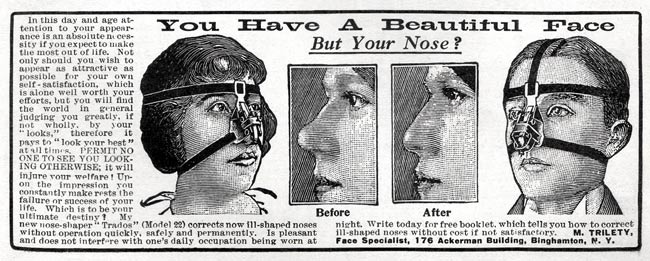
The “JAPs” (Jewish American Princesses) had been gifted nose jobs as high school graduation presents and came to class loaded for bear i.e. they were out to land a nice Jewish boy preferably in pre-med or pre-law. I had never been in close proximity to such exotic creatures and gazed open-mouthed at them in class as they simultaneously adjusted their hair, stockings and bra while filing their nails and applying lipstick. I was a goy so I was invisible to them. They were brainless and harmless and at least afforded me a chubby or two.
I think she sat behind me in Psych 101.
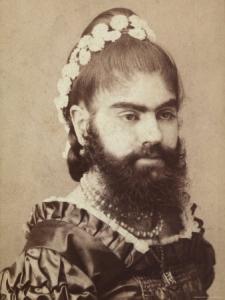
The “Rachels” and “Ruths” bore their Hebraic-honkers like a badge of honor. Their wiry hair was left to nature and they favored sandals, folk skirts and unshaven legs. Their moustaches were unshaven, too. They scurried around campus clutching to their peasant-blouse covered bosoms Joan Baez LPs, Lawrence Ferlinghetti poetry books and Wilhelm Reich’s The Function of the Orgasm. (I wouldn’t fuck these hectoring yentas with your dick.)
So… I was strolling across campus feeling like Joe College when a Rachel ran up to me screaming like a banshee, slavering like a bronco and demanding that I boycott class because LBJ was bombing Vietnam. She shoved a flyer into my hand and her unshaven face into mine and ranted about nukes, napalm and negroes. I thanked her and promised to read the flyer but she screamed into my face, “Nazi” and ran to her next target. I tried to proceed but was forced to walk a gauntlet of Rachels, Ruths and their male counterparts – the Bruces and Barrys. All screaming. All slavering. All thrusting flyers. All demanding that Brooklyn College be brought to a standstill because LBJ was bombing Vietnam.
The very next day the Six Day War broke out between Israel and Egypt and I was back on campus for more testing.
So… I was strolling across campus feeling like Joe College when the very same Rachel ran up to me screaming like a banshee, slavering like a bronco and demanding that I boycott class because LBJ was not bombing Cairo. She shoved a flyer into my hand and her unshaven face into mine and ranted about Auschwitz, Anne Frank and Arabs. I thanked her and promised to read the flyer but she screamed into my face, “Nazi” and ran to her next target. I tried to proceed but was forced to walk a gauntlet of Rachels, Ruths and their male counterparts – the Bruces and Barrys. All screaming. All slavering. All thrusting flyers. All demanding that Brooklyn College be brought to a standstill because LBJ was not bombing Cairo.
In fact, these leftist humanitarians wanted Cairo nuked!
Cairo – I figure 10 million dead before the Soviet retaliation.
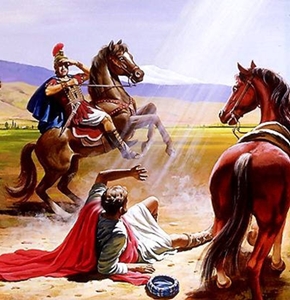
Suddenly and e’en like Saul of Tarsus on the road to Damascus, I was knocked to the ground by a blinding light of revelation. I then picked myself up and stood in the center of Brooklyn College, in the center of Flatbush, in the center of Brooklyn and knew in the center of my Catholic, Italian-American soul that I was in enemy territory. The scales had fallen from my eyes! I knew that the Rachels, Ruths, Bruces, Barrys and, yes, even the JAPs were not me. Not mine. Not American. All their supposedly selfless political activism was all about them. (And, they have done nothing to dissuade me of that conclusion in the more than fifty years since my Damascene conversion.)
You think it was easy getting that horse on campus?
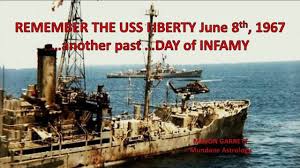
Day of Infamy
During the Six Day War, Israel, our supposed ally, deliberately attacked and attempted to sink the USS Liberty, an intelligence ship, observing the war from the Mediterranean. In order to prevent the Liberty from reporting Israeli war crimes, Israel killed 34 U.S. sailors and wounded 171 more. Israeli planes even machine-gunned U.S. sailors attempting to escape in life rafts.
Meanwhile, Israeli dupes inside the White House almost gave my Brooklyn College classmates their dream. They almost tricked LBJ into nuking Cairo. (Take a minute to imagine that scenario.) Then, the dupes and LBJ conducted a massive cover up. The surviving sailors were ordered and threatened into silence.
Israel claims its act of treachery carried out on a U.S. ship clearly flying the Stars and Stripes was a tragic mistake.
If you believe that, I’ve got a bridge in Brooklyn I wanna talk to you about.
POSTSCRIPT
In the 1970s, I learned that a former classmate at Brooklyn College had machine gunned many Palestinian women and children to death. When I knew this particular Bruce, he was a “peace & granola” hippie-dippie-trippie type. Then he got that Old Time Religion. From Meyer Kahane and the Jewish Defense League to the present, Brooklyn has been the breeding ground of Israel’s most violent fundamentalist lunatics.
Whenever I hear wild-eyed, wiry-haired women living on illegal Jewish settlements being interviewed with a baby on one hip and an uzi on the other, their Brooklyn accents are those of the Rachels and Ruths I first encountered on that bright June day in 1967 on the surprisingly bucolic campus of Brooklyn College.
In my last blog, I wrote about everyone’s favorite vampire, Bela Lugosi and his relationship to Brooklyn or, at least, Brooklyn gorillas. In this post, I want to discuss a real Brooklyn vampire. And, I ain’t foolin’.
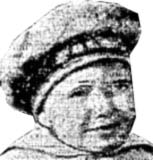
Children were his prey.
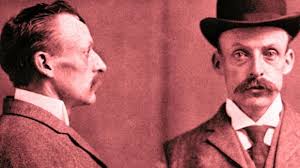
His name was Albert Fish and he worked as a house painter from the Gilded Age to the Great Depression. As he aged, he resembled a cuddly uncle. But, over those four decades, he abducted, raped, killed and ate children all over metropolitan New York. His work as a house painter gave him access to perfect hiding and abduction spaces like cellars, basements, hallways and sheds; and lethal access to children. Four decades. We still don’t know how many tenement kids fell into the clutches of this real live boogieman.
Billy Gaffney – my fellow Brooklyn Boy
One such unfortunate child was four-year-old Billy Gaffney. He had lived in my neighborhood. In fact, Billy was abducted in 1927 while playing in front of his tenement no more than five minutes from my 1950s boyhood home. His body was never found because Fish ate most of it. (If you are not of squeamish disposition you can read Fish’s description of that act in excruciating detail on Wikipedia. He makes Hannibal Lecter, Freddie Kruger, Jason Voorhees, Michael Meyers and Norman Bates look like the Vienna Boys’ Choir.)
A short list of Albert Fish’s perversions. And, remember much of this was performed on children and often dead children.
Billy’s abduction hit close to home for me (literally and figuratively) because of something that happened to me while I was playing in front of my tenement in 1957.
This was that incident…
One day, a strange man wearing dark sunglasses who was or pretended to be dumb appeared on my block accompanied by a large, menacing dog. He rang my tenement’s vestibule doorbells in an attempt to sell an obviously second-hand Mickey Mouse film projector. The Mickey Mouse Club was every kid’s “must watch” show so this projector was prime Pied Piper bait.
I can still see the battered box with Mickey’s smudged and stained face on its lid.
The stranger was quickly told to fuck off by the housewives annoyed at having been drawn away from their soap operas and quiz shows. I then inexplicably offered to take him around the corner to a neighbor I was sure would want to buy his piece of plastic crap. I trustingly placed my seven-year-old hand in his and led the way with his dog nipping at my heels.
The neighbor’s vestibule door was unlocked so I didn’t bother ringing her bell and escorted my new friend into her very dark hallway. I heard her TV blaring and knocked on her door. She answered with an angry expression that quickly changed to alarm. She told the stranger to fuck off and slammed the door. (I still wonder why she didn’t pull me inside, then slam the door and call the cops! But, maybe she wanted to get back to her soap.)
I shrugged and took the strange man and his snarling dog back out into the sunshine. As we exited the building a group of my friends shouted from the corner with obvious and uncharacteristic alarm, “Hey, Jackie, ya mother wants ya. She sez get up da house. Now!” I turned to apologize to the man but his dog bared its teeth and lunged at me. I jumped back, looked into the face of my new friend and saw that he was leering at me with an evil smile. Only then did I realize that I had broken the cardinal rule of childhood. He was a stranger. One of the strangers I’d been told not to talk to. Not to get into cars with. Not to take candy from. I was in danger. Stranger danger. With a sudden surge of fight-or-flight energy, I turned and bolted the fuck away from him and his mutt.
This incident (whether the threat was real or imagined) is why I have always been especially horrified and fascinated by Albert Fish. I can’t help wondering if Billy Gaffney also turned and saw his “new friend” leering down at him; if Billy felt the same shock of terror run through his little body as the one I can feel as I sit here typing more than six decades later.
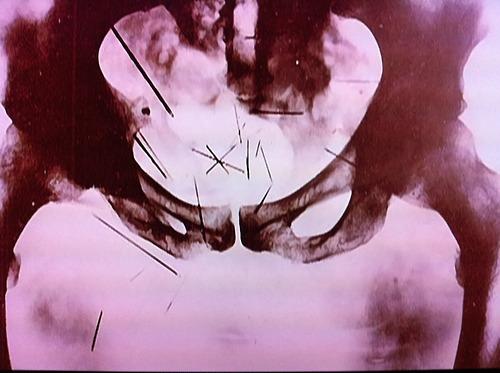
X-ray of the many pins that Fish inserted into his groin and carried for decades just for fun.
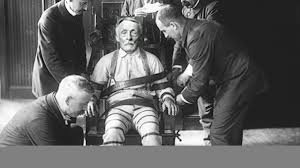
Ironically, the sensational trial of Albert Fish was knocked off the front pages by the even more sensational Lindbergh baby kidnapping. But, I’m convinced it was not knocked from the collective folk-memory of my Brooklyn neighborhood; its shared shuddering-memory of a Brooklyn vampire who had stalked its children in cellars, basements, hallways and sheds not that many years before I played in those dark, hidden, dangerous places.
Don’t ya just love these “extreme sports” junkies?
If you can stomach a disturbing but cathartic journey into the darkest of dark places then spend some time on the internet searching for Albert Fish the Brooklyn Vampire. There have been two awful movies made about Fish and countless TV documentaries and books of varying quality. I recommend the book Trail of Blood by Michael Angelella.
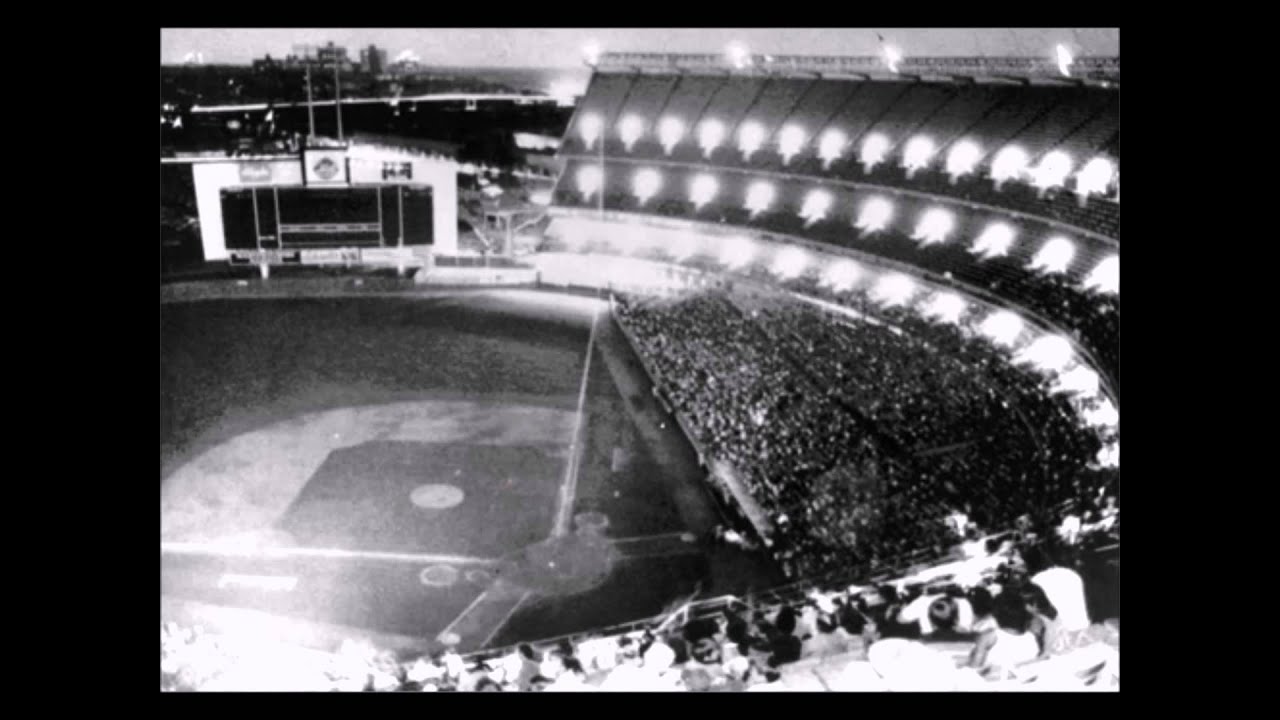
The evening of July 13, 1977 was hot and sticky as July nights in New York City are wont to be. Vic and I were at Shea Stadium watching the Mets lose to the Cubs when BANG the lights went out. Groans, cheers and whistles from the large crowd followed immediately by jokes.
“Hey, Mets, pay ya fuckin’ electric bill.”
The crowd assumed it was a power failure limited to Shea. And, the stadium was able to run dim emergency lights so we weren’t left in total darkness but more of an eerie glow. Then we were told there had been a blackout in the entire city and the groans, cheers, whistles and jokes got louder.
“Hey, Mayor Beame, pay ya fuckin’ electric bill.”
It actually looked much darker inside Shea.
A hardy (and hungry) few felt their way to the concession stands to stock up on beers and dogs before they got hot or cold. Others gathered around geeky fans who’d brought transistor radios to the game. (These “transistor types” looked like they’d been dressed by their mothers who invariably supplied them with sandwiches and a thermos.) The “huddled masses” around the radios looked like actors in a Radio Free Europe commercial hungry for news from the Free World. Meanwhile, the stadium announcer kept us informed and the organist kept us entertained with a Christmas carol sing along.
Then a few cars were driven out of the bullpens on to the outfield grass with their headlights shining toward the infield. Several players from both teams took this cue and took the field to play a phantom baseball game with an invisible ball in ghost light. They made spectacular diving catches, impossible throws and gravity defying slides. The crowd went wild!
After an hour or so and just as the fun had begun to pall (“Okay, enough of this shit, how the fuck am I gonna get home?”), we were told that transportation had been arranged and we would all be home safely and soon. We were directed to buses in the Shea parking lot that were bound for major intersections all over the five boroughs where we would be able to get on the city buses that were still running. In our many thousands, we exited the stadium in better order, humor and time than we did in daylight. No pushing. No punches. No panic.
Vic got his bus to the Bronx but I had to get to the Bowery – the scuzziest street in the slum known as the Lower East Side of Manhattan. Walking around my neighborhood was an exercise in urban survival even in bright sunshine. The idea of traversing it in blackness did not fill me with joyful anticipation. Plus, in the summer of 1977 the city had just about bottomed out. It was not a happy place and having the serial killer known as the Son of Sam picking us off at random and at night did not fill New Yorkers with confidence. But, I couldn’t sleep at Shea so I boarded a bus that took me across many blacked-out Queens and Brooklyn neighborhoods then over the Verrazano Bridge to Staten Island finally dropping me at the ferry terminal.
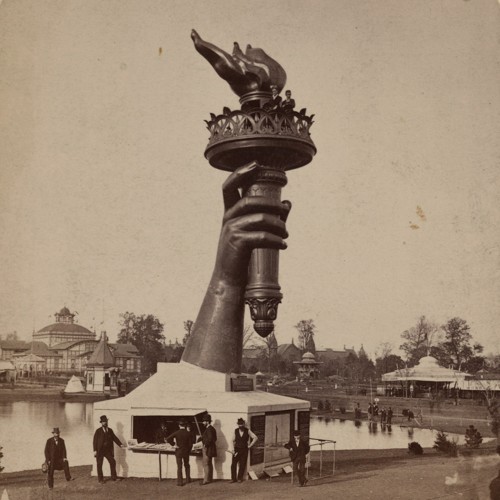
From there, we “happy few” ferried across a New York harbor that was in almost total blackout – the skyscrapers of Manhattan (including the World Trade Center) were barely visible. The only bright light in the harbor was the flame atop the torch on the Statue of Liberty. It was a scene out of a dystopian sci-fi movie – beautiful but unsettling. A hush fell over us passengers as the ferry plowed by Lady Liberty and that hush enveloped us until we disembarked at the Battery. There we climbed aboard city buses already waiting to take us uptown via the main avenues.
Only the flame was lit and shining, the statue was in darkness.
This evacuation and transportation of the Shea Stadium multitude was handled brilliantly. Yet, I have seen it reported nowhere! We all like to complain about government inefficiency but I gotta say that in this case NYC really nailed it. I blush to admit that I felt proud of my hometown and her people. No panic. No anger. No fights. Just cooperation and jokes. Lotsa jokes.
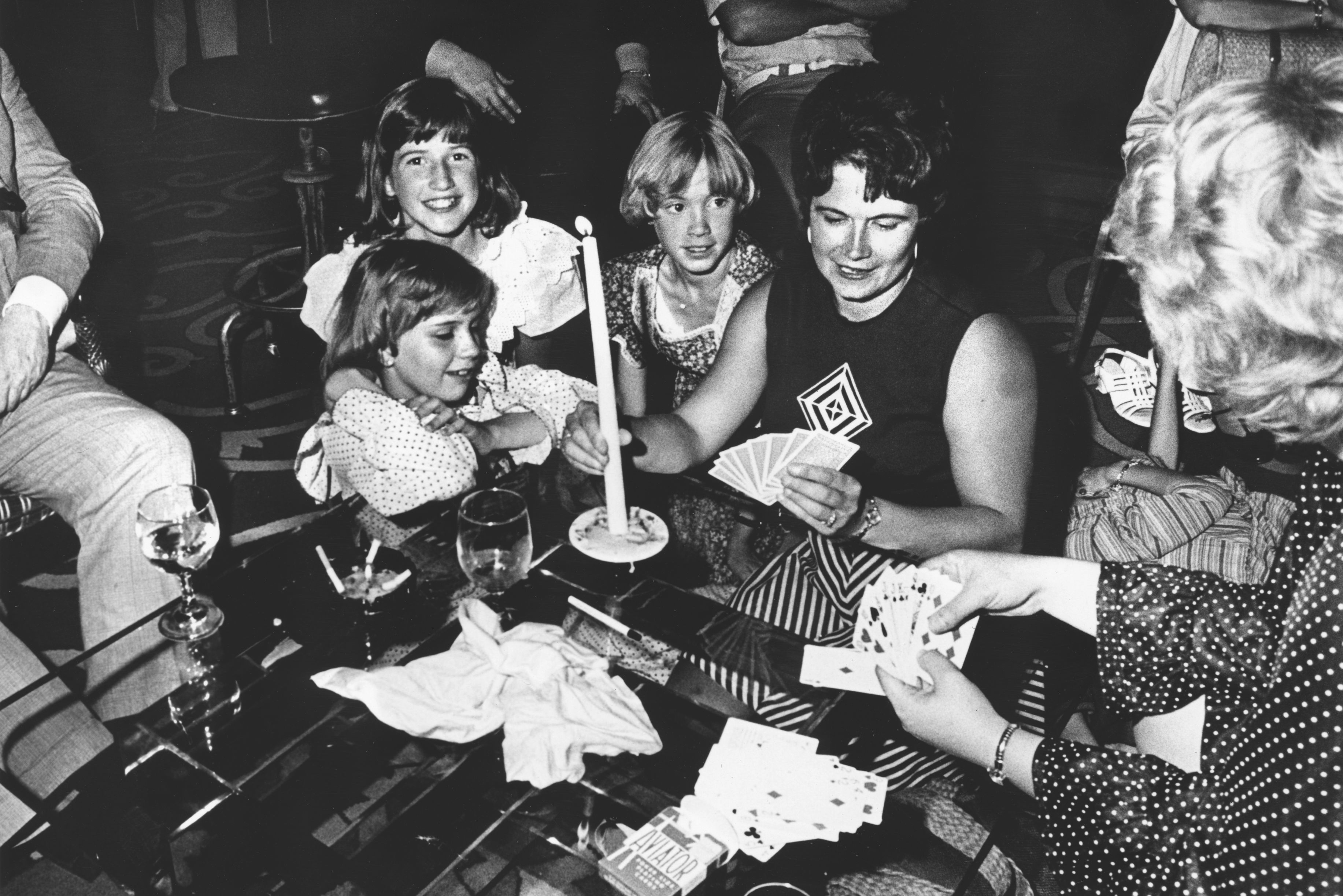
I got off the bus on First Avenue and praying that the Son of Sam was not lurking nearby equipped with a night scope, I began slowly picking my way toward my loft on the Bowery. (Goddamn how do blind people do it?) I made the trek slowly with only passing headlights, flashlights and candlelight from impromptu stoop parties to guide me. I declined invitations to join those parties coz I just wanted to get home.
Stoop soirée in full swing.
I did have to navigate through a few stretches of inky blackness and, this being the Bowery, I had to be careful not to trip over bums sleeping on the street. Plus, a few overly friendly creeps loomed up at me from the murk hoping to give or receive a blowjob. But, WHEW, made it home!
Blacked out in a blackout
A TALE OF TWO CITIES
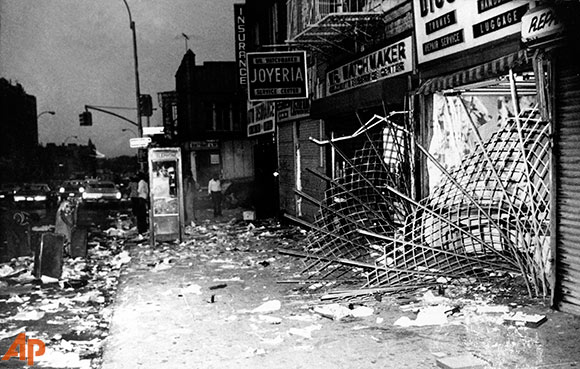
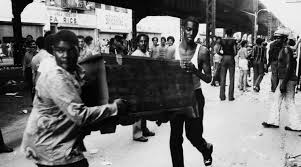
The next morning, I went for a walk around my still powerless neighborhood where the stores and restaurants were practically giving the rotting and melting food away. It wasn’t until late that afternoon, when power was restored, that I learned there had been widespread looting and arson in certain neighborhoods. (Ya want numbers? – $1.2 BILLION worth of damage in 2019 dollars. 3,700 arrests – the largest number of mass arrests in NYC history!)
Burn Baby Burn!
Since 1977, the narrative about the blackout has been all about excusing those crimes with nary a mention of the cooperation. Perhaps this is because that cooperation seemed restricted to certain other neighborhoods. The spin has been that the crimes were caused by racism. The blackout has been turned into yet another tale of poor Blacks being victimized by evil Whitey.
Have you noticed that book stores never get looted?
Apparently, power failures are just another aspect of White privilege and the patriarchy. Apparently, it was my fault that Blacks looted and torched stores, restaurants and even their own apartment houses. It’s over forty years later and I have yet to see, hear or read a single account of the blackout (including many by foreign news sources such as the BBC) that doesn’t push this anti-White race-hustle bullshit.
The awful truth is that when the lights went out on July 13, 1977 some New Yorkers went feral.
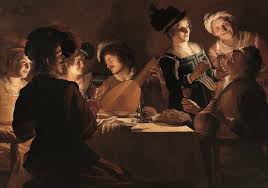
The awful truth is that when the lights went out on July 13, 1977 some New Yorkers went festive.



























 Boy Outa Brooklyn